Anytime I’ve mentioned going to Antarctica, penguins become a topic of conversation within moments. Penguins are what everybody immediately associates with Antarctica (except for some people who ask about polar bears, which are only found in the North). I was excited to see them, but I wasn’t ready for how great it was. I’ve seen… Read More

During this past summer season at McMurdo we experienced numerous occasions of heavy fog. The fog would form over the ocean/sea ice and would creep up the slopes into town and even up to the laboratory. This type of fog was particularly frustrating for running our lidar systems since it was so hard to predict.… Read More

One of the most famous optical phenomena of the polar regions is the Aurora. In the Arctic it is known as the Aurora Borealis, or Northern Lights, and in the Antarctic it is the Aurora Australis, or Southern Lights. With the growing nighttime at McMurdo, we’ve been lucky enough to see some beautiful examples of… Read More
This lidar campaign has been an ongoing project for 15 years. We are hoping that the project can continue into the 2030s. The Chu research group could make some impressive discoveries with 2 full solar cycles of lidar data. But keeping a project continuous for 15 years and counting is no easy feat. Each year… Read More

This is the fourth post in a series on optical phenomena in Antarctica. This post covers cloud iridescence, one of the most elegant and beautiful optical effects I’ve seen. Above: A golden cloud with iridescence, appearing as a rainbow streaking through the cloud. Photo taken from McMurdo town outside of building 155. Cloud iridescence is… Read More

Jess and I have many responsibilities as the winter over lidar team at McMurdo station. These responsibilities include maintenance of the lidar systems, data analysis, outreach, and, of course, the operation of the lidar systems. Anytime the skies are clear, we’re trying to gather data. But what does lidar operation actually look like? The first… Read More

We’re changing from the summer to the winter season at McMurdo. Besides the unique changes in sunlight, slowly changing from 24 hour sunlight to 24 hour darkness, the transition is also visible in the vastly decreased population and the quality of the data we can collect with the lidar systems. The station population drops by… Read More
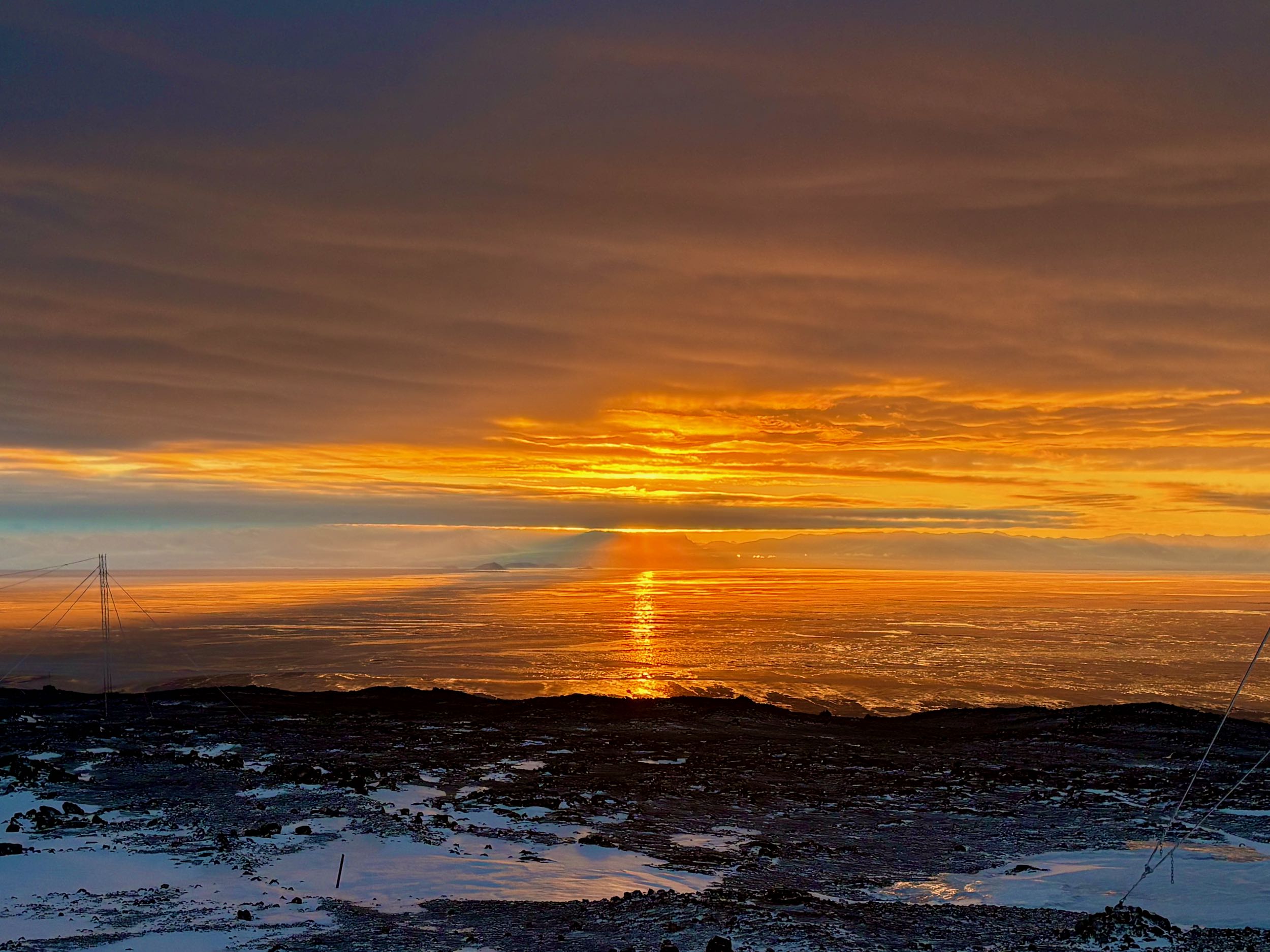
After a successful summer season, we now progress towards winter at McMurdo station. We had 3 months of difficult refurbishment from November to February, and we’re now hoping for quality data as we approach the winter season. While the Lidar systems are still having issues, Jess has done an excellent job of troubleshooting and keeping… Read More
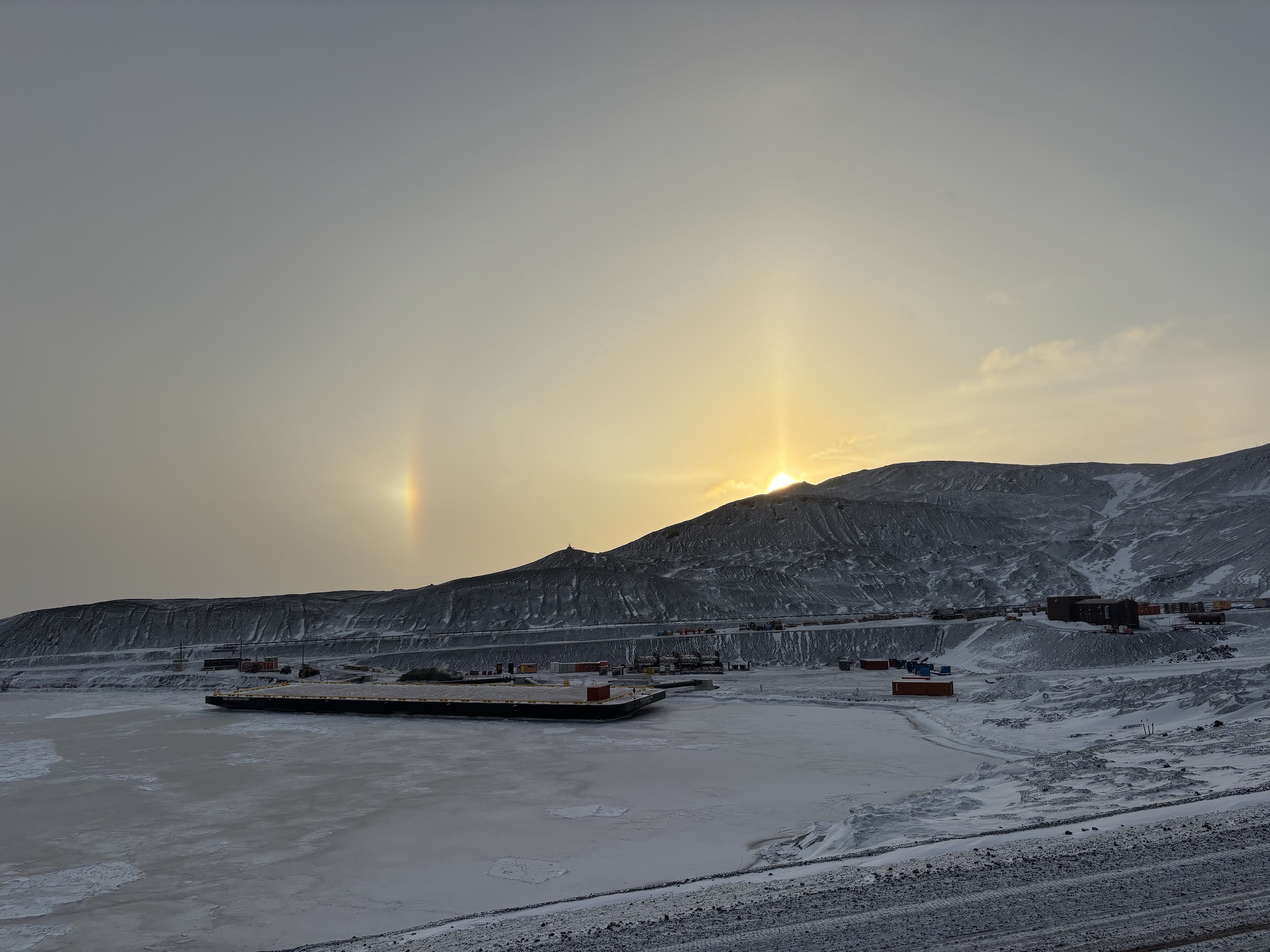
This is the third post on atmospheric optical phenomena we’ve seen in Antarctica. The previous post detailed sun halos. This post will cover sun dogs (parhelia) and sun pillars. Above: Sun dogs (parhelia) and a sun pillar over NSF Discovery Pier and Hut Ridge, viewed from town. Sun dogs, also known as parhelia, appear directly… Read More

Jess and I (Zig) ran the lidar systems from February 18th to February 26th, an almost 6 and a half day lidar run resulting in approximately 122 hours of data. Runs of this length are rare, since they require extended periods of clear, cloudless skies. Such long runs provide rare opportunities to research the upper… Read More