My name is Zig Lewon, and I joined the Chu research group in late December 2025. I had a fairly unusual (and very lucky) path to doing research on the ice.
I studied Atmospheric and Oceanic Science at CU Boulder. During my time there, my professors often talked about opportunities in atmospheric science. One lecture in particular stood out—John Cassano shared photos and stories from his research in places like Svalbard, the North Pole, and Antarctica. Seeing both the science and the adventure sparked an intense desire to follow a similar path. I wanted to do research, contribute to the field, and satisfy the sense of adventure that gnawed at me.
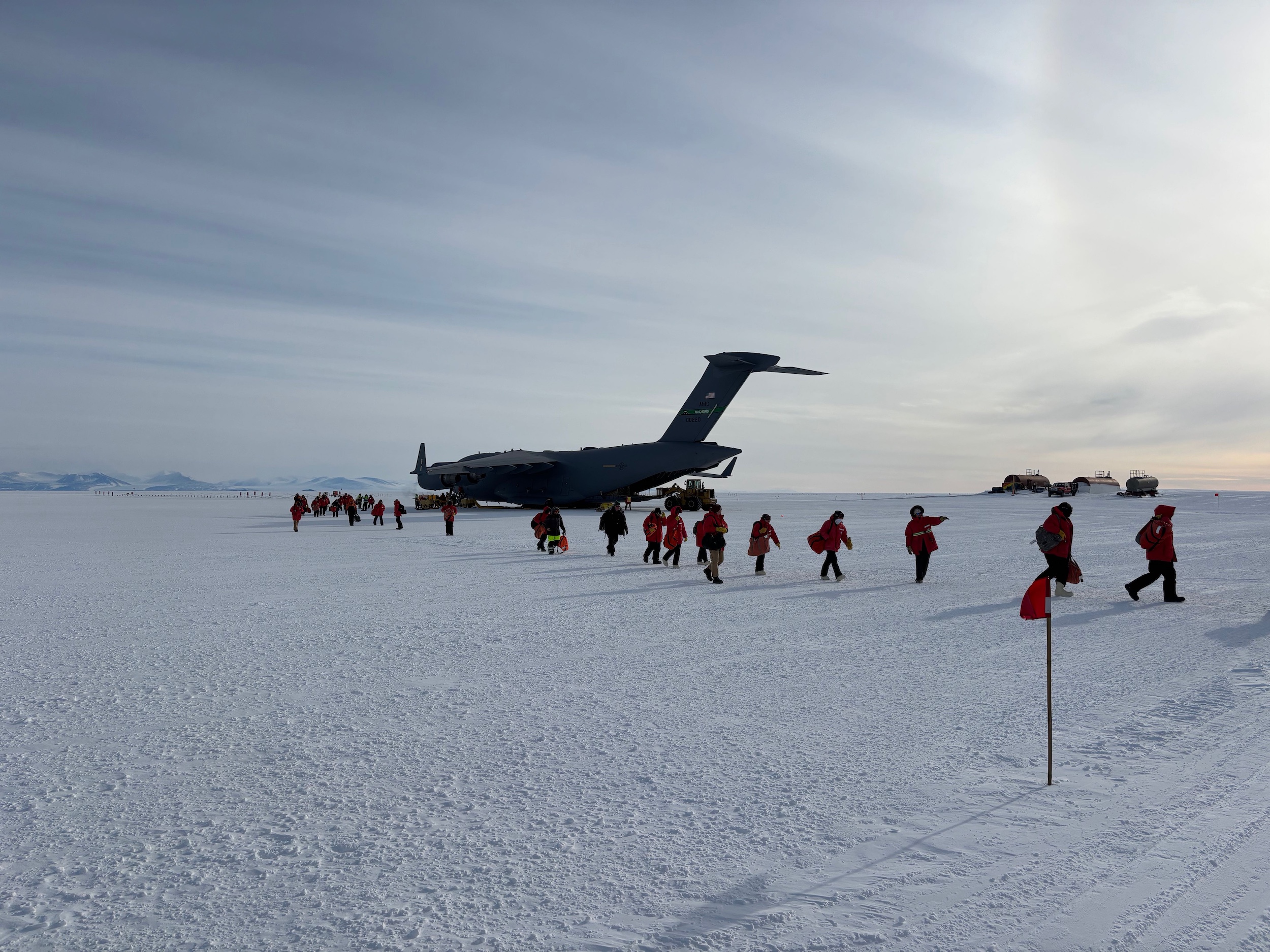
After graduating, I spent several months traveling and working as a chef in New Zealand. While figuring out my next step, I realized I didn’t necessarily have to be a scientist to go to Antarctica. Everybody needs to eat, right? So I looked it up—McMurdo Station was hiring cooks. I applied and got the job. After making it through the physical qualification process and background checks, I flew out of Christchurch on a C-17 cargo plane and landed on the Ross Ice Shelf.
Above: C-17 cargo plane offloading a batch of people (including myself) on the Ross Ice Shelf, about to be shuttled to McMurdo Station.
I had a great time working as a cook in the galley. It was a tight-knit kitchen community, and it felt good to support the science happening on station—even if I still wanted to be part of it more directly.
Not long after arriving, I ran into Jess Alschuler, who I had taken an oceanography class with during undergrad. She told me about her role as the lidar project lead for Dr. Chu and mentioned they were looking for a winter technician. I reached out to Dr. Chu, started learning the systems, and after meeting and interviewing with her, I was accepted as the winter-over technician. With approval from the galley management, I was able to transfer to the lidar team mid-season (which we are extremely thankful for).

Above (left to right): Zig Lewon, Dr. Xinzhao Chu, and Jess Alschuler in the galley just a few days before Zig officially transfers to the team.
I officially joined the lidar team on December 25, 2025. Since then, I’ve trained on the systems, learned how lidar works, and helped with maintenance and operations alongside Jess and Dr. Chu (who left the ice on February 9).
Even though I originally came down as a cook, I found a place in the science happening here and have been able to fulfill my goal of doing research in Antarctica. It’s been everything I hoped for—and a reminder that sometimes the path into science isn’t a straight line. Scientists can come from anywhere, even kitchens.

Welcome aboard, Zig!